
Kennedy Range, WA: How to Visit & What to Expect

Kennedy Range National Park
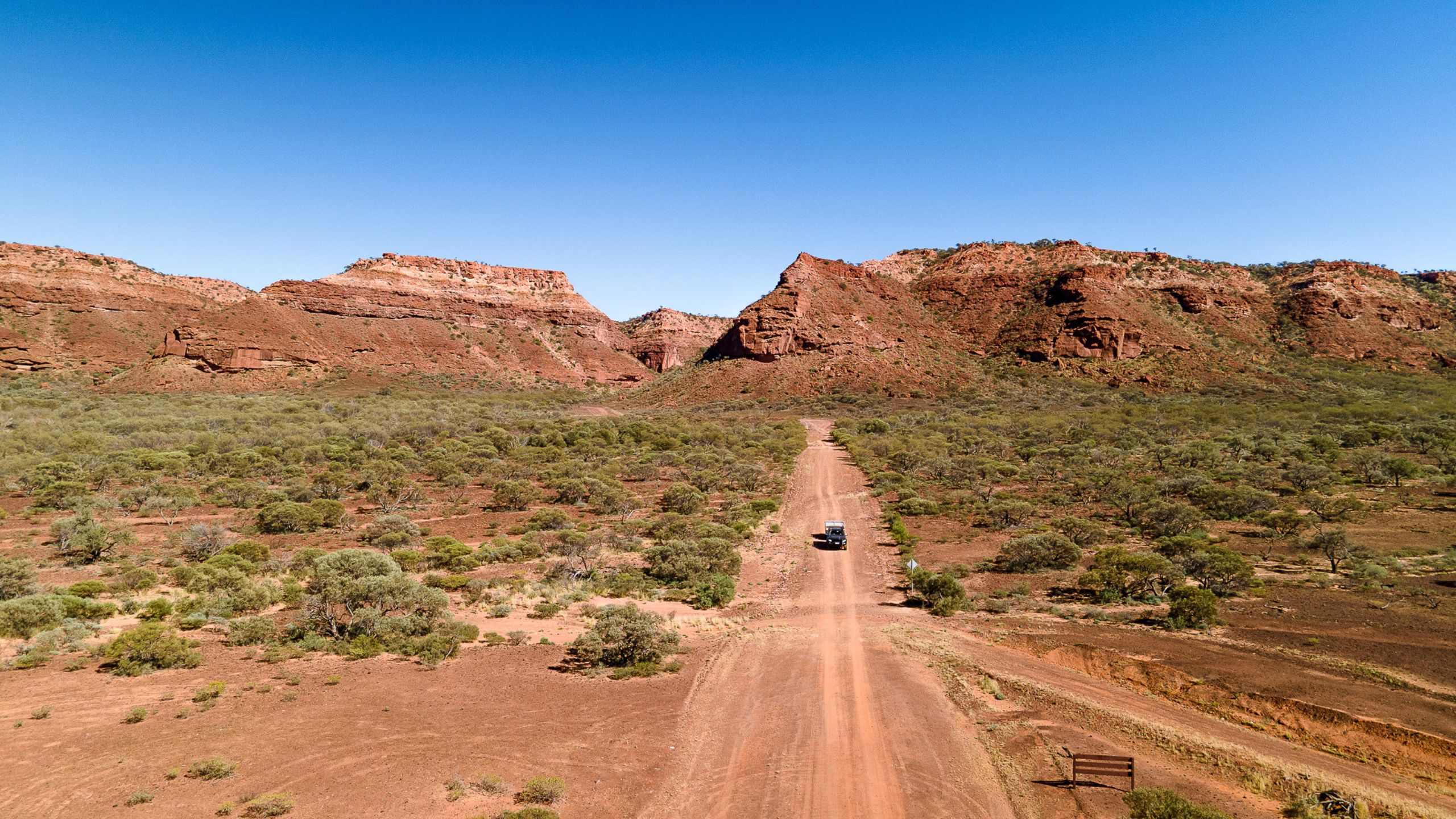
Located in Western Australia’s Gascoyne region, you will find the spectacular and rugged landscape of Kennedy Range National Park. This giant ancient sandstone plateau rises dramatically 80 metres above the surrounding plains and stretches for more than 75 kilometres long and between 12 – 25 kilometres wide.
We stumbled across the Kennedy Ranges thanks to a friend’s recommendation, and honestly, it blew us away. It offers some of the best hiking, and breathtaking outback scenery in the state. In our opinion it is one of the most underrated national parks in Western Australia. Even better is there is no entry fee to access Kennedy Range National Park.
How to get there
Kennedy Range National Park is approximately 1,100 kilometres north of Perth (12 to 13 hour drive) or 240 kilometres from Carnarvon. The roads are all sealed until Gascoyne Junction, from there the final section is unsealed, and the roads are generally well-maintained but after rainfall the roads can be become unsuitable for 2wd vehicles, heavy rain can close the roads for all vehicles. Recommend checking the latest road conditions before travelling here.
Things to do in Kennedy Range National Park
This is a park that is begging to be explored, and the main drawcard is the hiking trails of Kennedy Range. There are six established trails to suit all hikers that range from short, easy walks to more challenging climbs. Each trail offers a unique perspective on the range’s ancient geological formations and immerses you in the untamed wilderness of this remote national park. We didn’t encounter another person on any of our hikes. While it was incredible to have these natural wonders all to ourselves, it was also a reminder of just how remote and isolated this location can be.
Hiking Trails
Honeycomb Gorge – (600m return – Class 3)
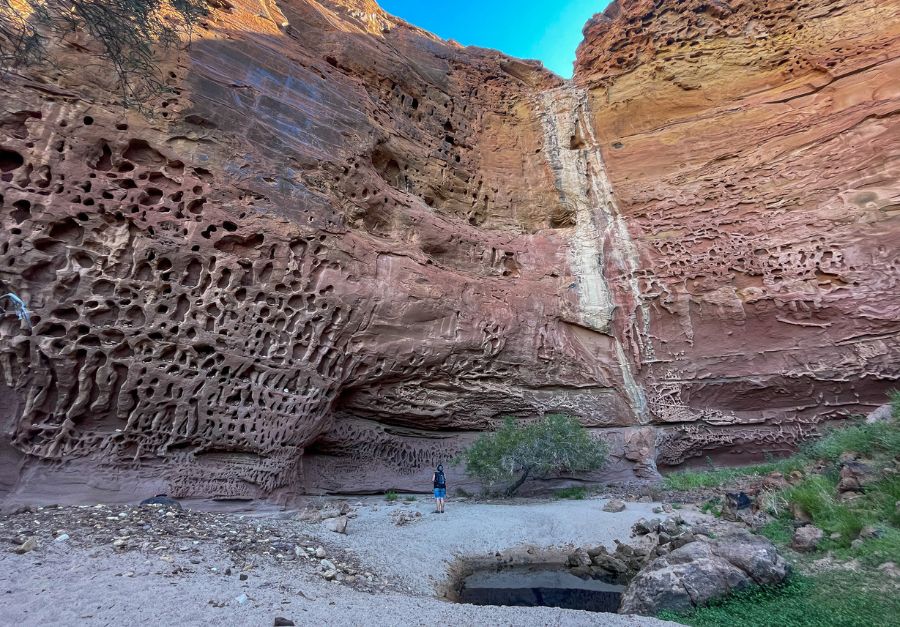
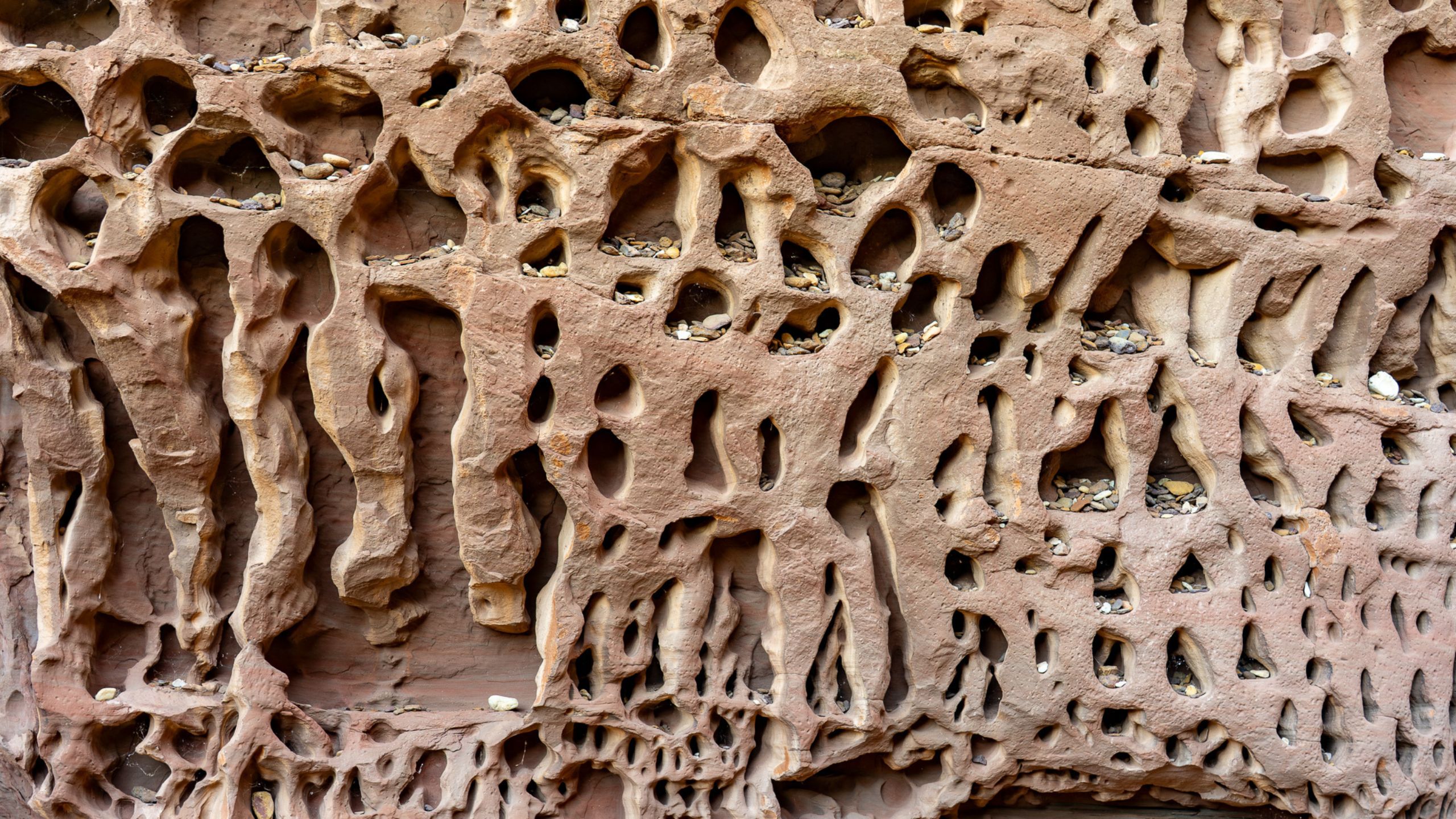
This is a relatively easy walk, there are a few rocky sections along the short path and then it opens out and you step onto the sandy floor of a seasonal waterfall and pool. The curved rock face towers above you and feels like you are standing in an outdoor arena. The walls are covered with honeycomb patterns, weathered away by wind and rain – hence the name of the trail. You can see where the waterfall would be thundering through here after heavy rains. We stopped and sat on the boulders at the base of the waterfall and just admired the afternoon light and nature at work.
Drapers Gorge – (2km return – Class 4)
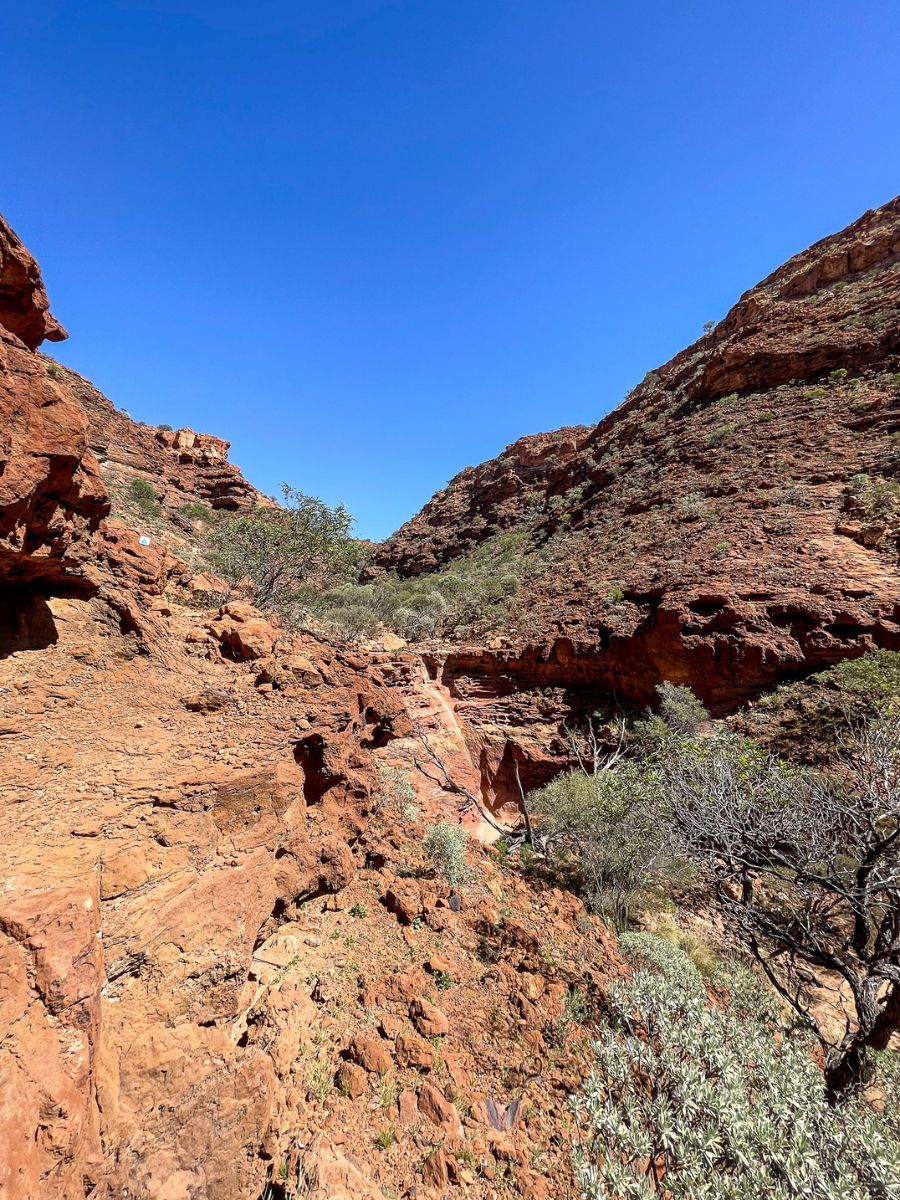
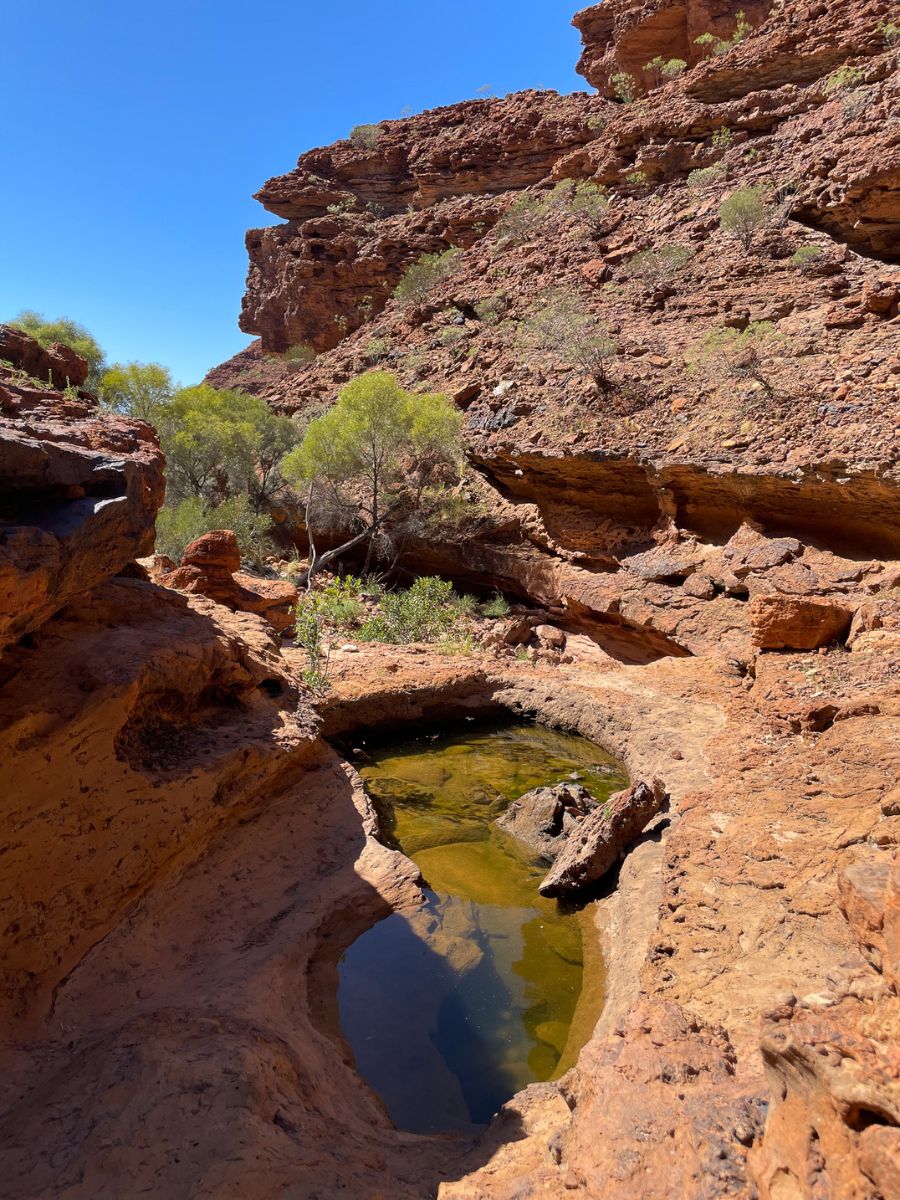
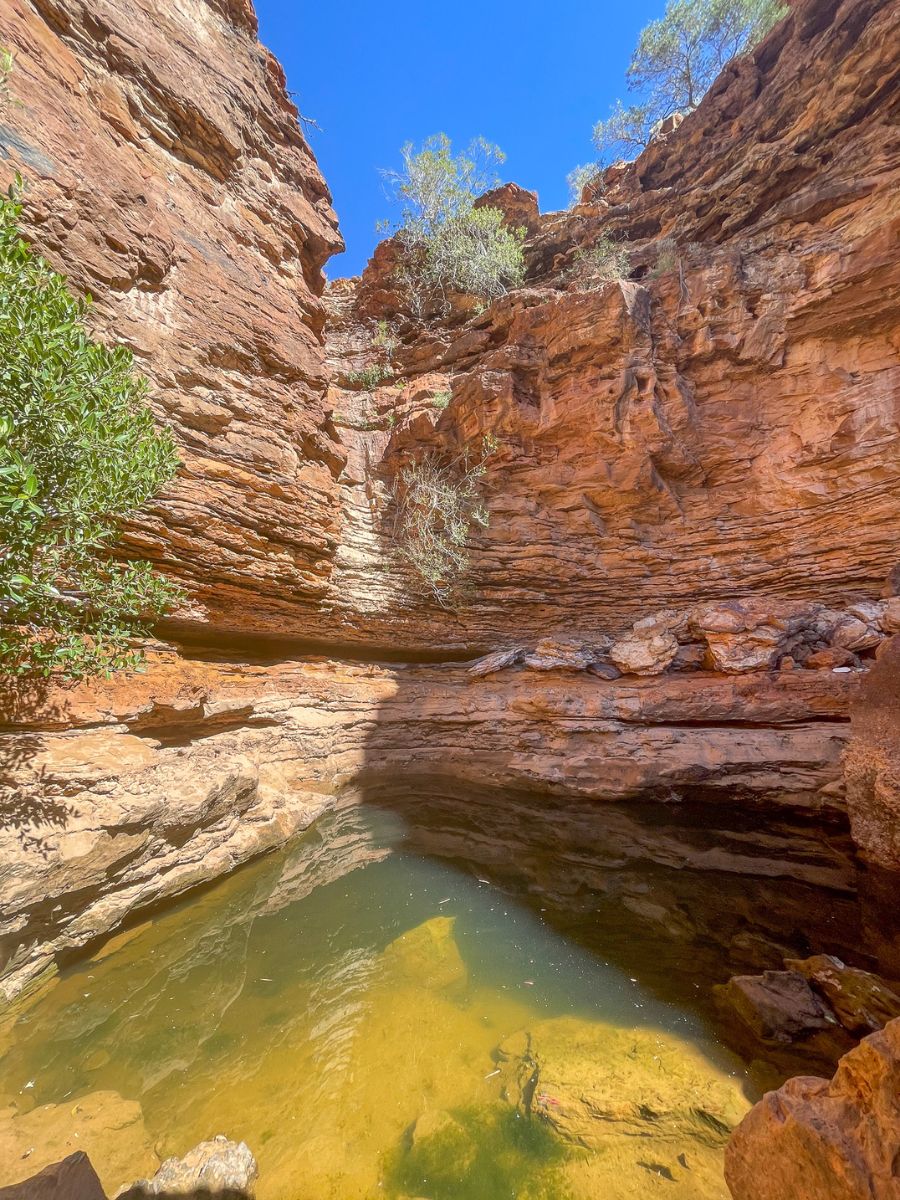
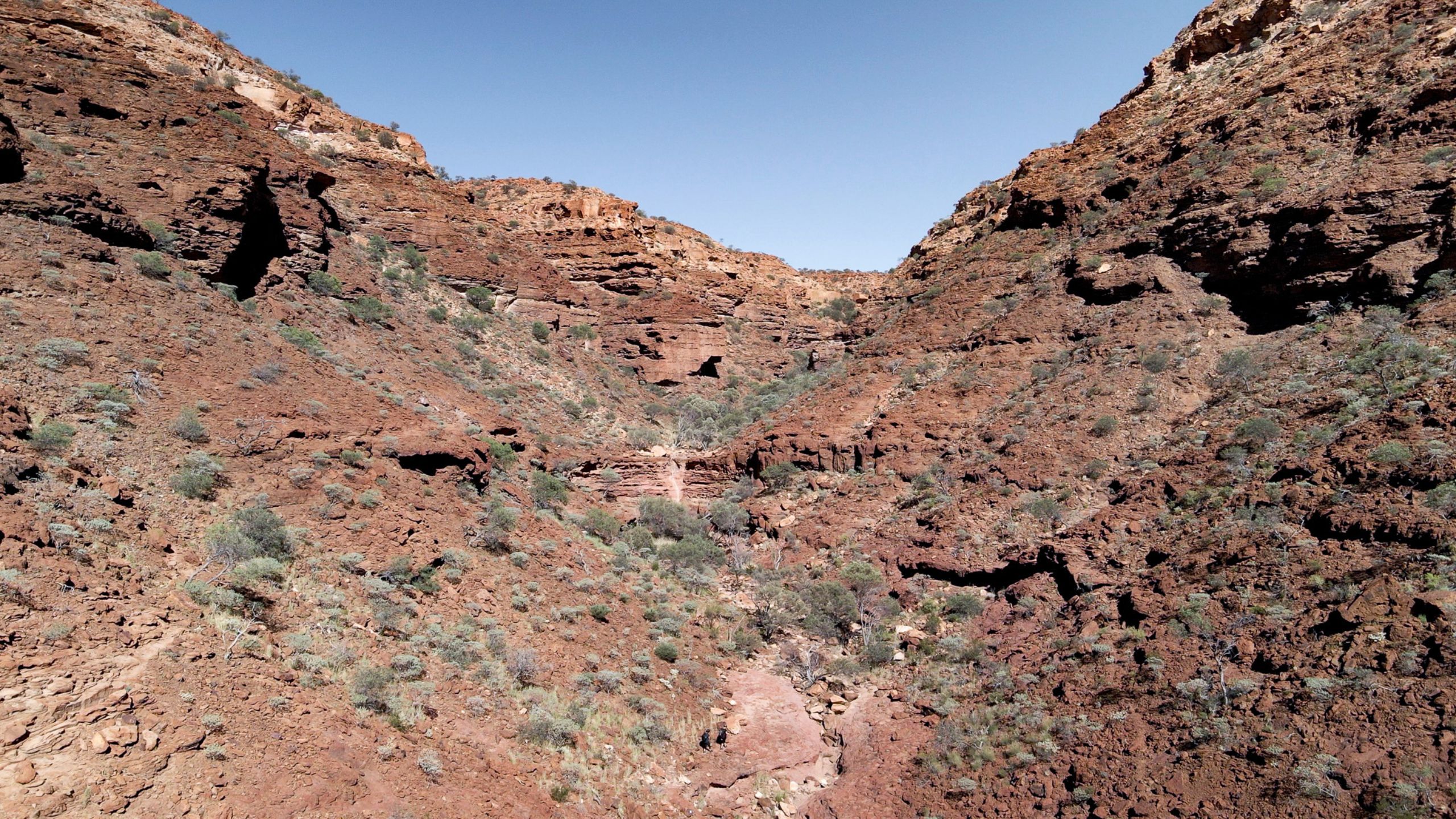
This short trail starts out pretty easy, but don’t be fooled, this hike required navigating narrow rock ledges, loose rocks and some rock scrambling. This trail follows a series of seasonal rock pools carved out by water over the centuries. Reaching the end there is a larger waterhole, it contained some water from recent rains, whilst not suitable to swim in, it was an obvious refuge for the wildlife during hot days. To reach this trailhead you will need to take a short drive from the Temple Gorge campground to the car park for Drapers Gorge.
Temple Gorge – (2km return – Class 3)
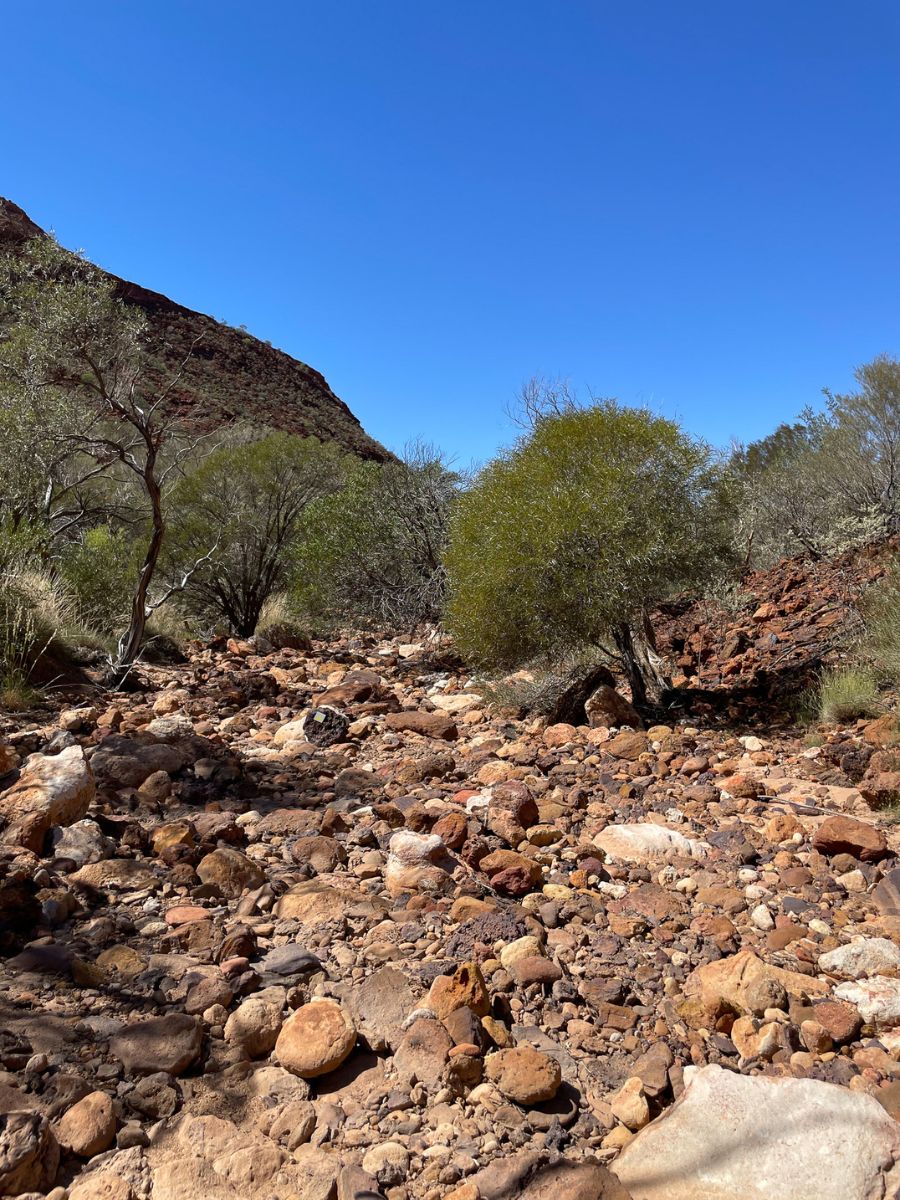
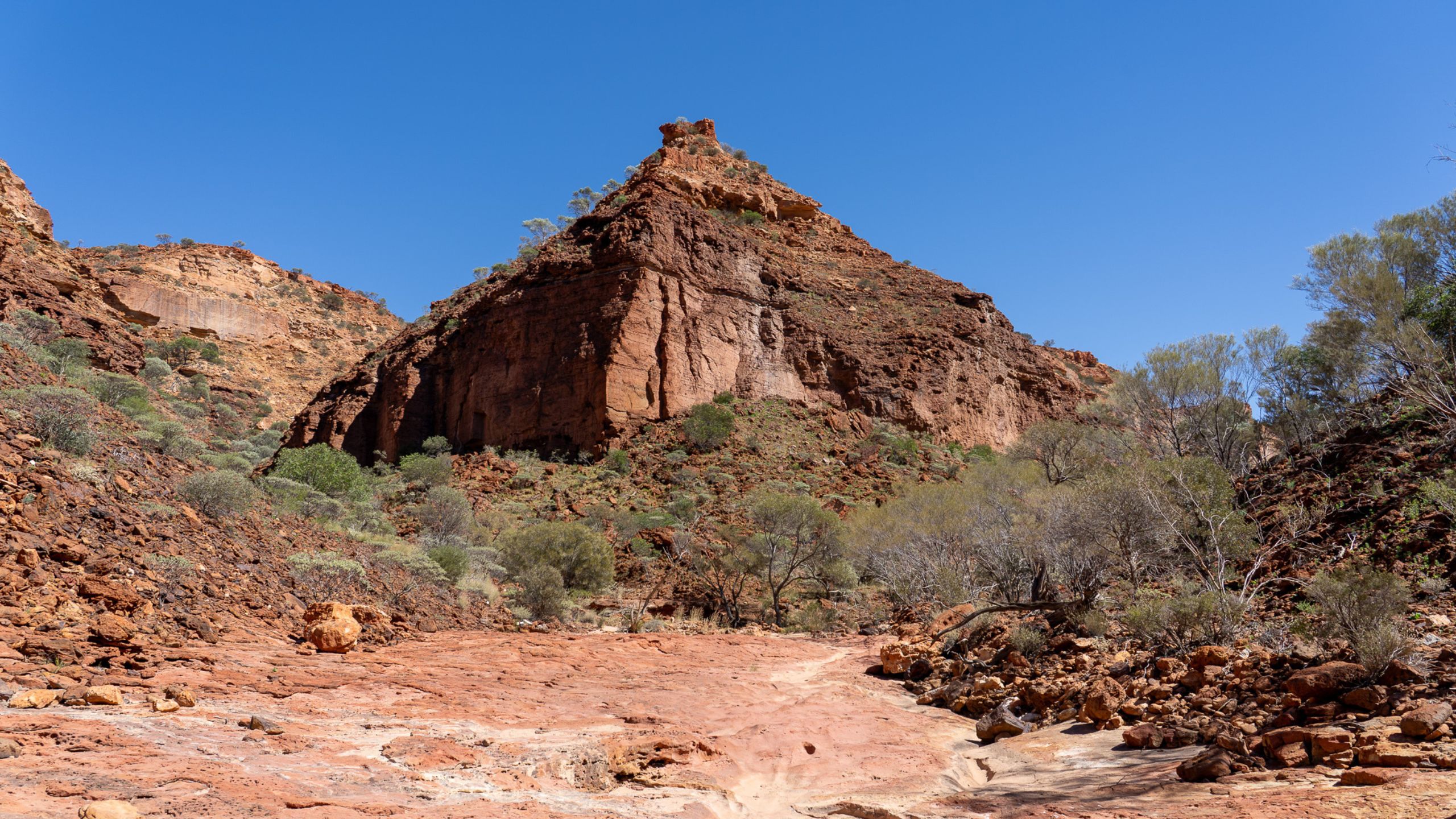
This was a mostly level easy walk on a sandy based track with some larger rocks to navigate through the dry creek. Access the start of the trail from the campground and you will make your way through some low-level scrub before winding your way through the gorge and onto the dry creek bed surrounded by towering cliffs. Standing pride of place at the at the end is the large, impressive rock face of Temple Rock.
Escarpment Trail – (3.4km return – Class 4)
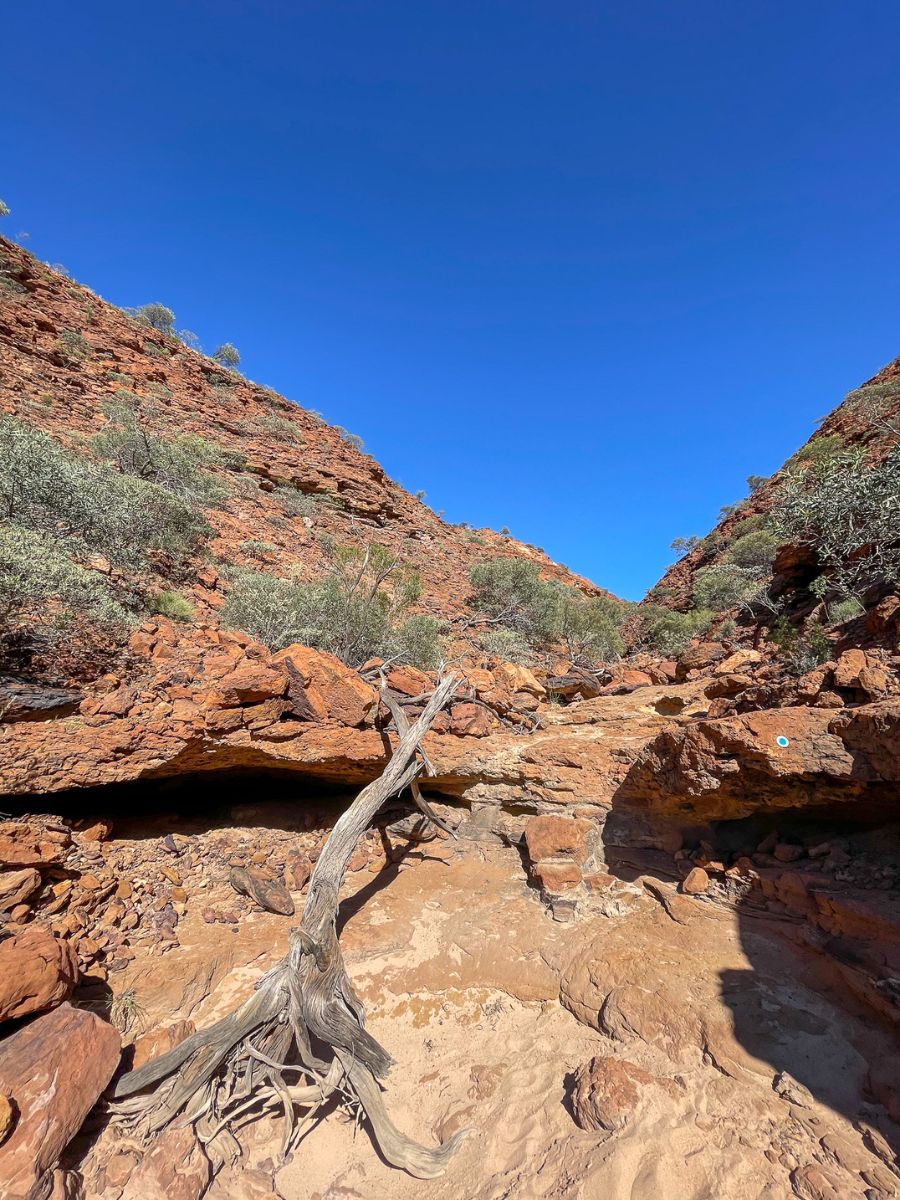
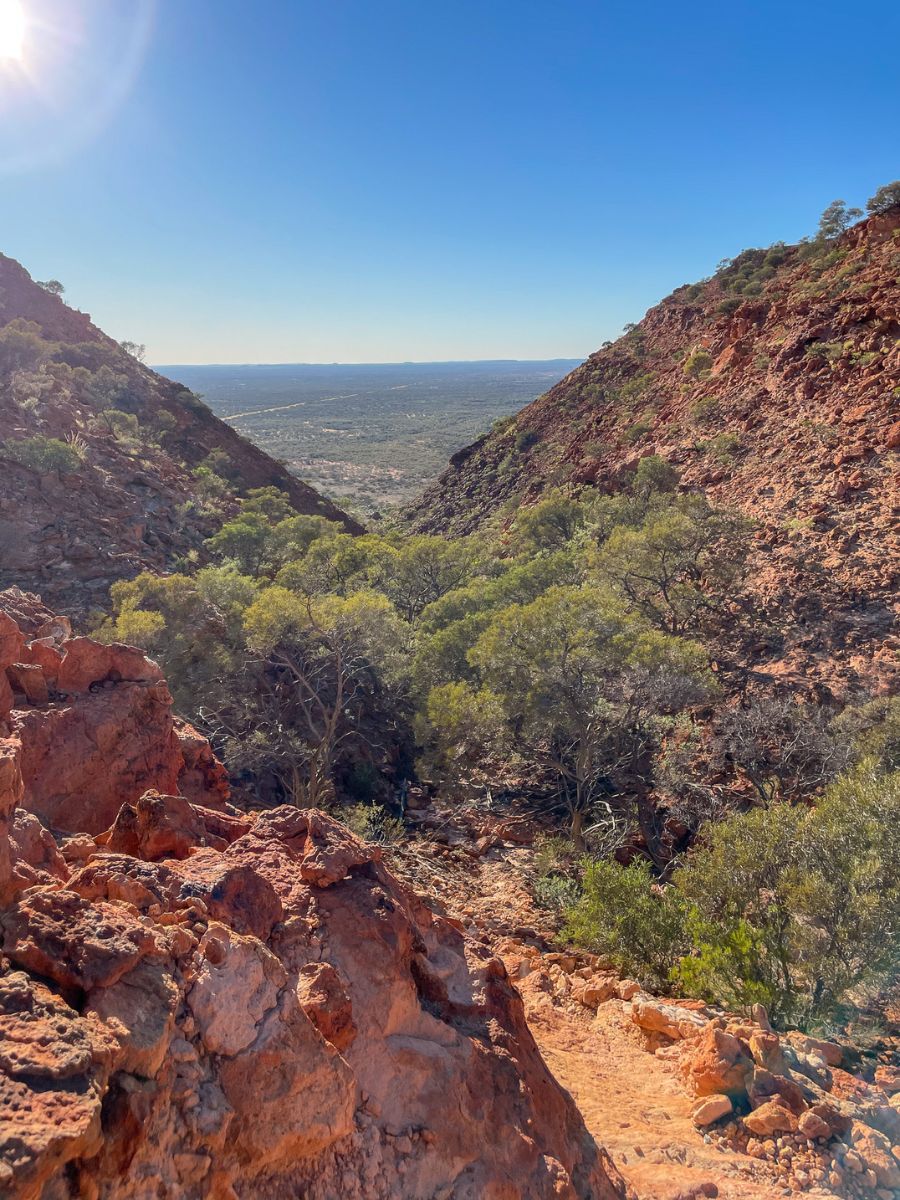
This was our favourite hike – the climb is not easy, but we thoroughly enjoyed the challenge and the panoramic views at the end – made it all worthwhile. The trail does have markers to guide you to the best route – they are not always obvious – so make sure you are on the lookout. The trail consists of some steep climbs, loose rocks and cliff edges you need to tackle.
You will walk the last 500 metres or so on top of the plateau and from the top you get the sense of the sheer scale of the range and how vast the surrounding plains are. It made our tiny camper below look insignificant. In that moment, we felt small, and was a humbling reminder of how powerful nature is and we stood there completely in awe of the rugged landscape before us.
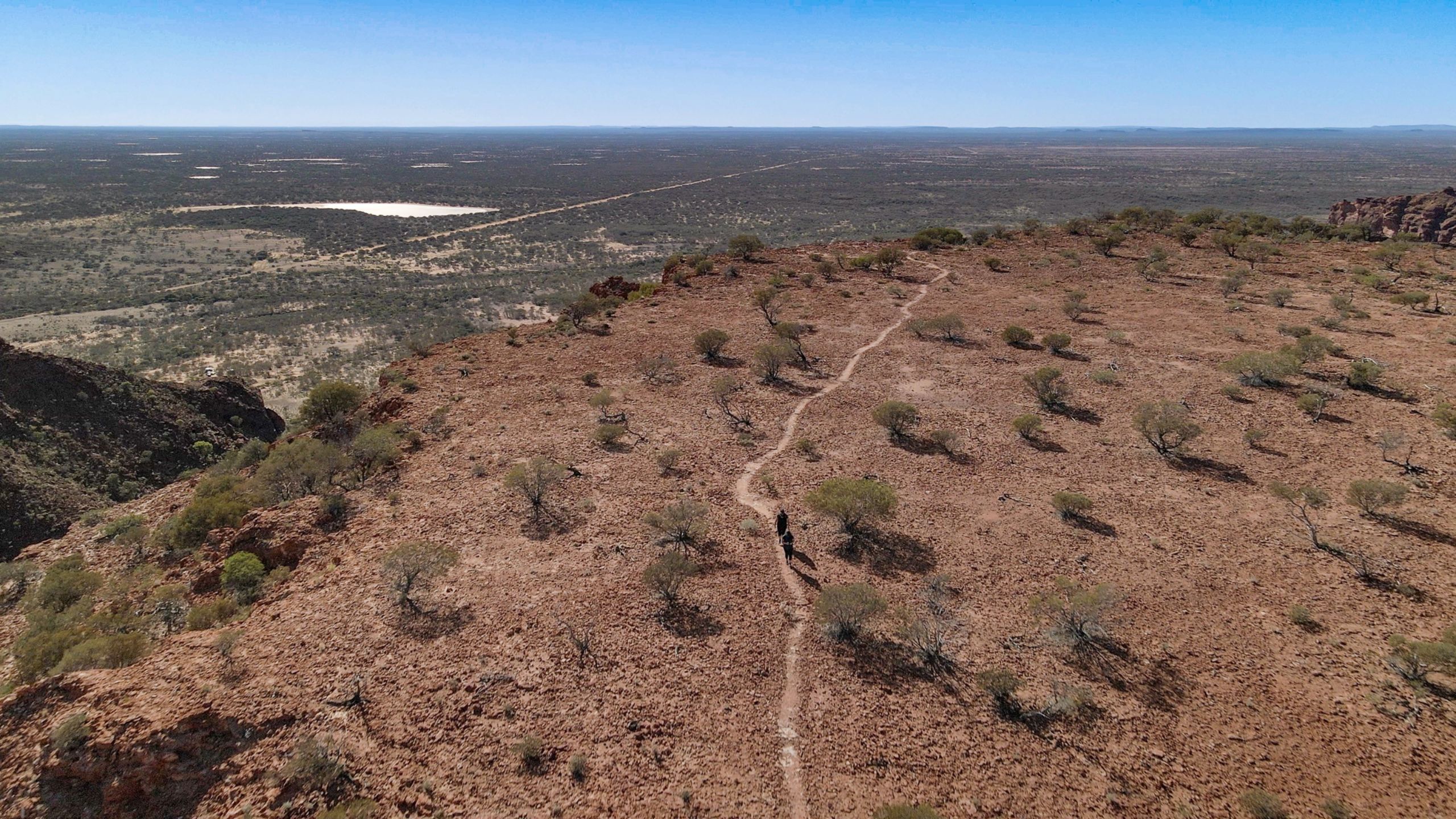
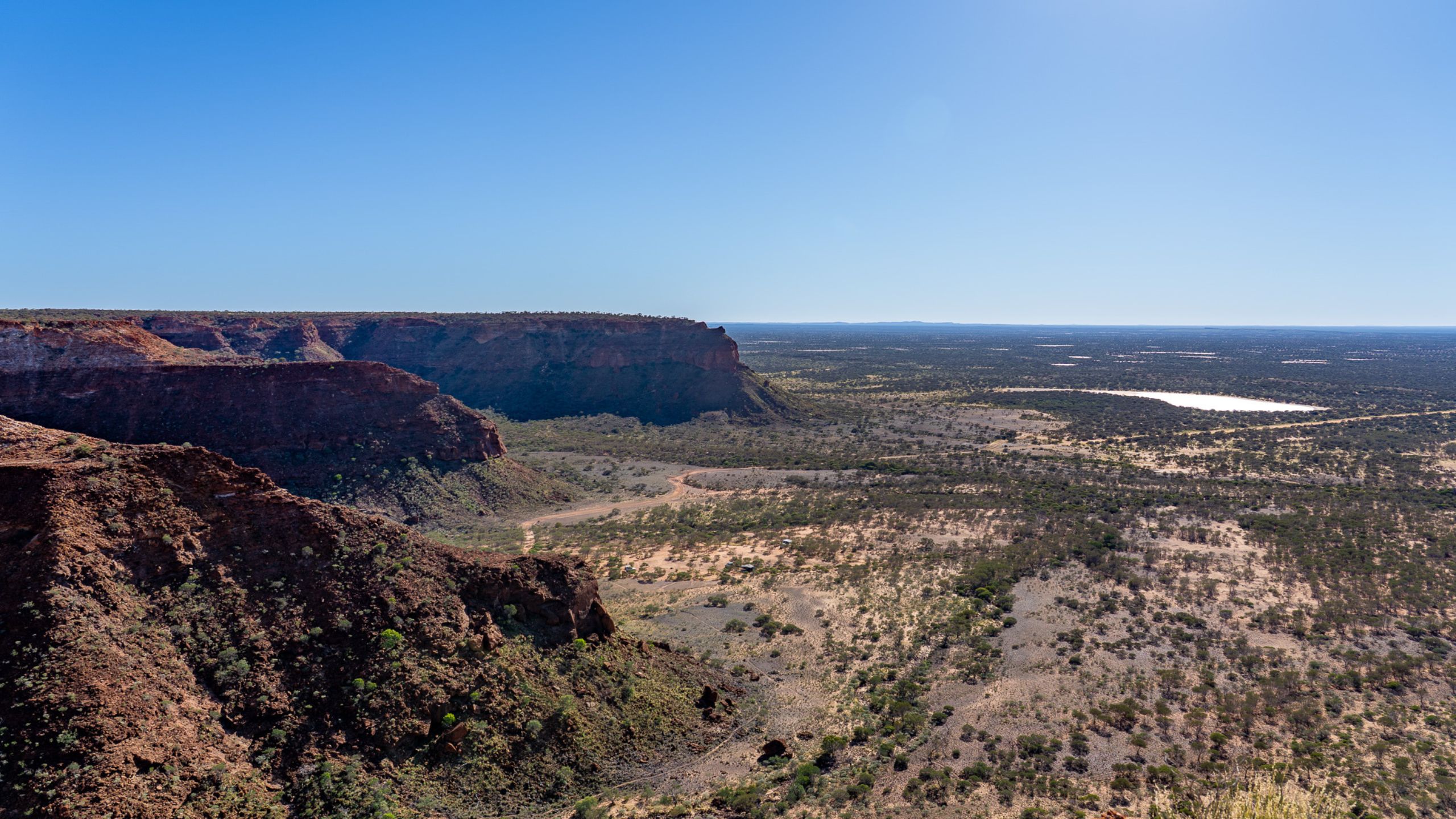
You want to start this trail early to avoid the heat of the day and not too late as descending in the dark on this trail would be difficult. Start the trail from Drapers Gorge car park or from the Temple Gorge Campground.
Additional hiking trails we didn’t get to complete during our stay include the Escarpment Base Trail – (5.8km return – Class 3) and the Sunrise View Trail – (300m – Class 3). Trail map and information for all hikes can be found here.
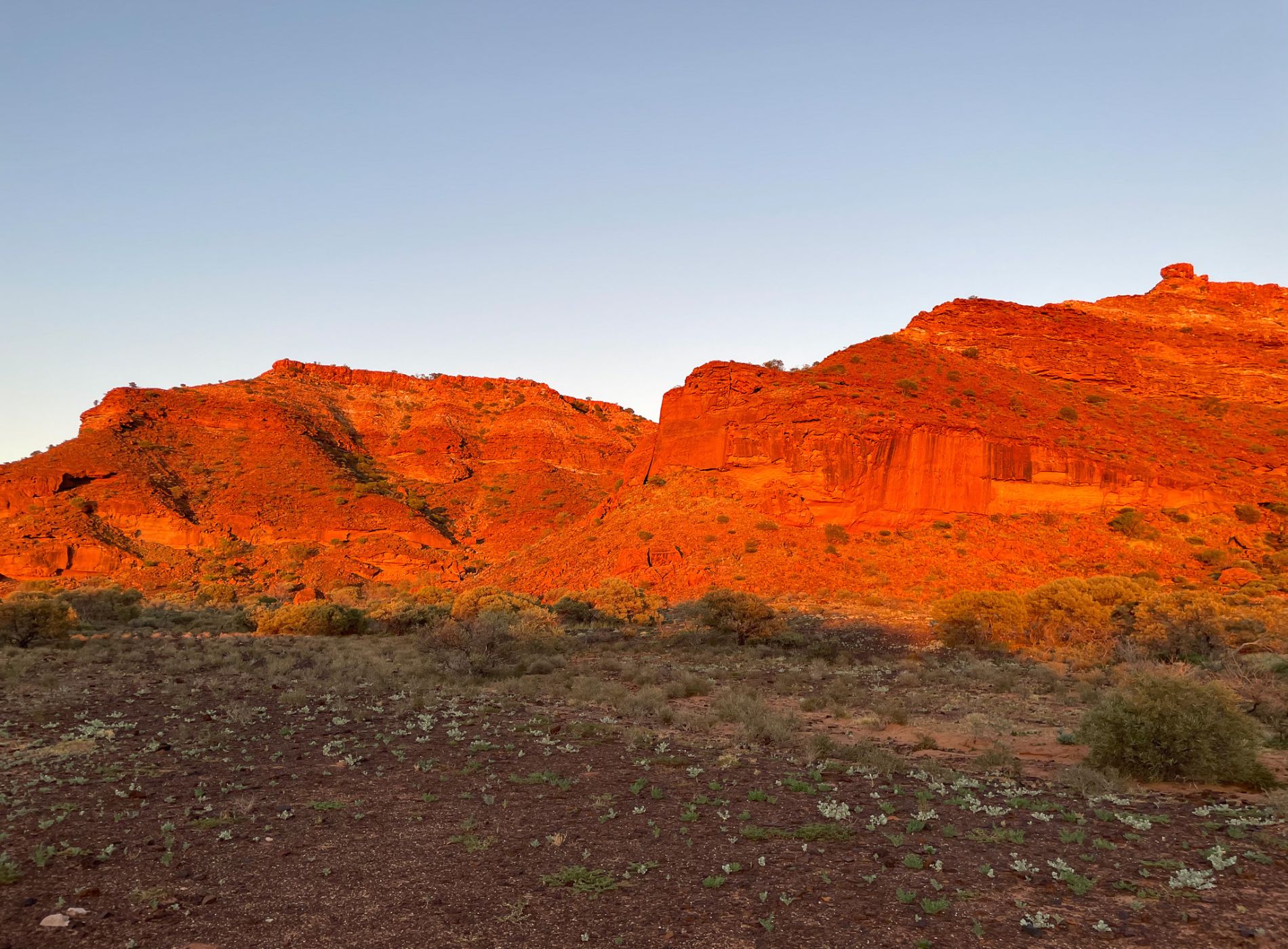
For our last morning, we drove back towards the start of the Drapers Gorge Trail and parked up for sunrise and watching those first rays light up the range is something else entirely. The deep red/orange that washed over the massive cliff faces was mesmerising. We stood there, just us, captivated as the new day dawned and bathed this ancient landmark in colour.
Camping in Kennedy Range
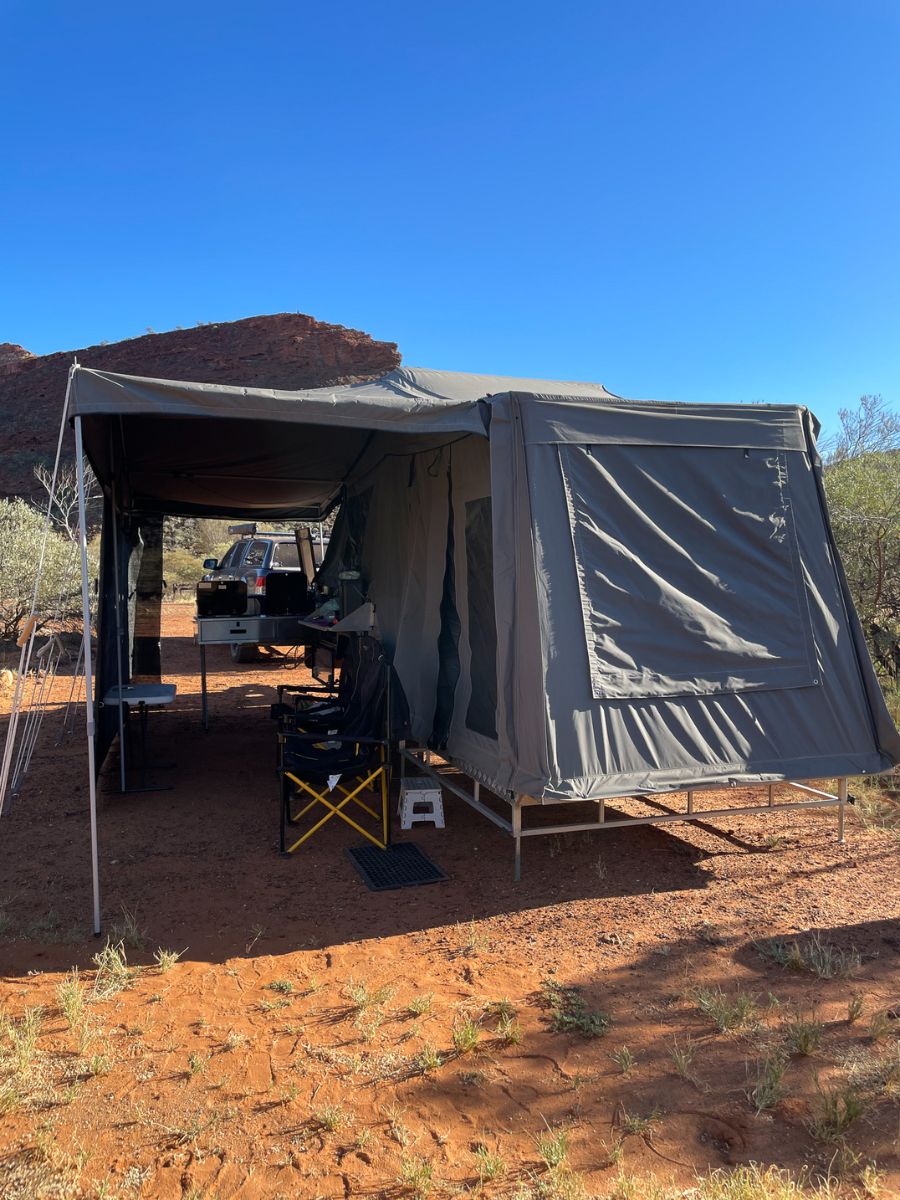
The park’s only campground is Temple Gorge Campground. It is a basic bush camp with around 10 unpowered sites, there is no booking of sites, it is a first come, first served basis. Facilities are basic and include drop toilets, picnics tables and a communal fire pit. Camp fees do apply – (2025 pricing) $15 adults, $10 concession, $5 children per night. There is a camp host usually from May – September, outside of this, you pay via an honesty box located at the campground. Alternatively, for travellers requiring more amenities the Junction Tourist Park is located 60 kms away in Gascoyne Junction and offers powered sites and cabins.
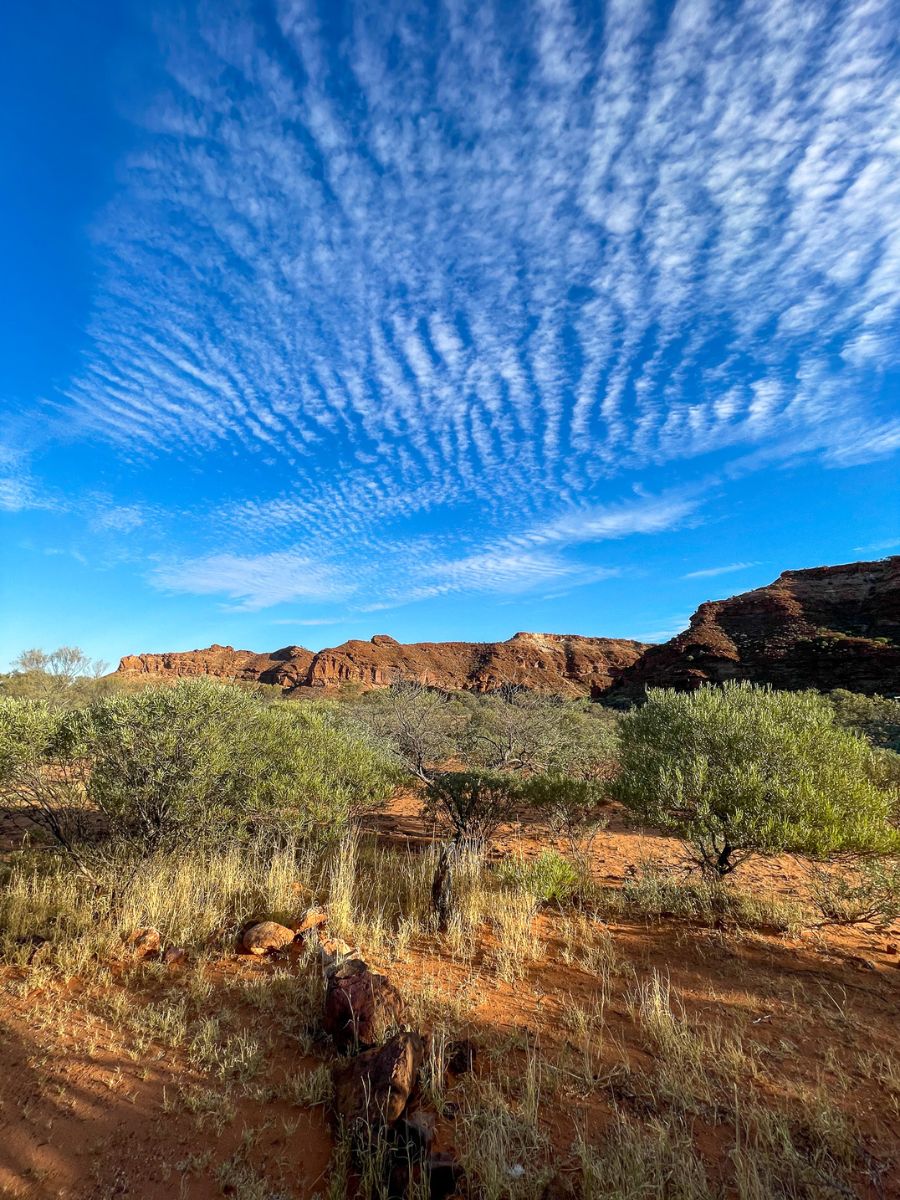
We stayed two nights at the campground; and found this to be plenty of time to complete the hikes, have some relaxing time at camp and enjoy the solitude this location affords. During our stay there were only two other guests, making it a very peaceful experience. Whist it was quiet when we visited, the campground can get busy on weekends and during school holidays. If you have the means to – we highly recommend staying at Temple Gorge Campground and sleeping under the starry skies. The star gazing is exceptional due to the minimal light pollution and the skies being so vast and clear – it really is spectacular.
Best time to visit
The best time to explore the Kennedy Ranges is during the cooler months — May to September, ideal for hiking and camping. Daytime temperatures are mild, and the dry landscape is transformed after winter rains, with vibrant wildflowers in bloom, particularly during August to September. Summer can see temperatures exceed 40°C, so avoid the hotter months if you can. We visited in the April and had clear blue skies with an average of low 30-degree days. Fly nets were necessary and the heat radiates off the gorges so it can feel hotter when on the trails. Ensure you are covered up and bring plenty of drinking water with you.
Remote travel safety tips
Kennedy Range National Park is one of Western Australia’s most remote destinations, and that isolation is a big part of its appeal. There is no mobile reception within the park, making it an ideal place to disconnect and immerse yourself in nature. However, it also means you must be completely self-sufficient when visiting. There are no fuel stations, shops, or water available within the park – the nearest services are 60kms away at Gascoyne Junction on unsealed roads.
Travellers should come prepared for this remote location will all supplies including food, extra fuel and plenty of water. Some general safety tips for visiting this region include:-
- Start your hikes in the early part of the day especially in the hotter months.
- Cover up – be sun smart – the heat can be intense in this region.
- Wear sturdy hiking shoes, and recommend a fly net in the hotter months.
- Carry plenty of water when on the trails, recommend 3-4 litres per person.
- Carry a first aid kit and a satellite phone or personal locator beacon (PLB).
- Advise friends or family of your travel plans.
- Always check road and weather conditions before commencing your travels. Avoid visiting after heavy rainfall, access roads are often cut off or closed.
A visit to Kennedy Range National Park is a must in our opinion. A chance to disconnect and explore this untouched wilderness and experience some of the most beautiful, remote and rugged landscapes in WA. This was not on our original list of destinations but we are so grateful we visited and it remains one of the highlights of our Western Australian travels.